Fleet EV Charging Infrastructure Built for Operational Reality
DC chargers stop being infrastructure the moment fleets rely on them daily. At that point, fleet EV charging predictability matters more than peak power ratings.
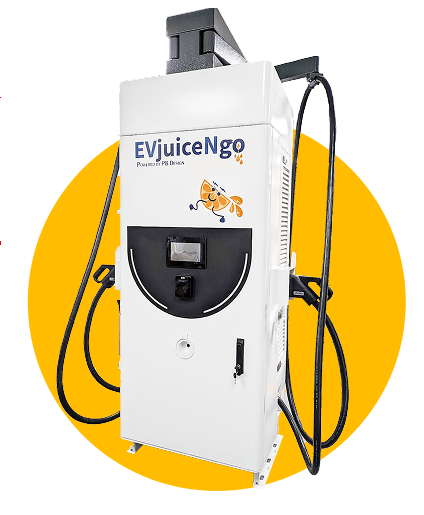
EVjuiceNgo designs fleet EV charging infrastructure and DC charging systems for operations that cannot afford ambiguity once chargers go live.
For depot-based, private and semi-private fleet EV charging environments, performance after installation matters as much as initial specification.
Request a Fleet EV Charging Resilience Review

The Shift Fleets Experience
Most DC charging decisions focus on what happens before installation, hardware selection, power capacity, and capital cost.
For fleet EV charging operations, the real exposure often appears afterwards.
When vehicles, routes, drivers, and service commitments depend on charging reliability, the system becomes operationally critical. At that point, uncertainty carries measurable consequences.
Downtime is not just technical; it affects scheduling, reporting, internal accountability, and customer commitments.
These operational impacts are often more costly than the charger itself.
Fleet EV charging infrastructure needs to reflect how vehicles are actually used.
That includes:
- Route patterns
- Charging windows
- Depot layout
- Vehicle dwell time
- Utilisation growth
- Power availability
- Internal support processes.
For commercial fleets, the right fleet EV charging approach is not only about installing enough chargers.
It is about making sure the system can support daily movement, maintenance planning, service commitments and future scale.
What Actually Drives Fleet EV Charging Costs Over Time
Once fleet EV charging becomes embedded in operations, long-term cost is shaped less by purchase price and more by operational clarity and dependable charging behaviour.
Cost increases when:
- Issues are detected late
- Responsibility is unclear
- Resolution pathways are inconsistent
- Internal teams are pulled into repeated escalation
Organisational friction compounds quietly, but over time that friction becomes more expensive than hardware.

Our Position in Fleet EV Charging Environments
We do not promise fault-free charging. DC power systems do not behave that way.
Instead, we focus on making fleet EV charging:
- Predictable
- Diagnosable
- Supportable
- Accountable
When an issue occurs, the objective is clear and concise insight, not confusion.
Fleets deal with one accountable OEM for diagnosis and verification, rather than navigating multiple disconnected parties.

The Three Drivers of Operational Charging
Across fleet EV charging environments, long-term reliability and cost are typically shaped by three factors:
Clarity
Defined ownership, documented evidence, and structured escalation when behaviour changes.
Consistency
Repeatable detection and resolution as utilisation grows.
Consequences
A realistic understanding of how downtime affects vehicle availability, schedules, and internal accountability.
Charging strategies that overlook any one of these often feel more costly later.
Start a Conversation
Who Is Fleet EV Charging Built For
EVjuiceNgo works with fleets that:
- Operate private or semi-private fleet EV charging
- Expect fleet EV charging to become business-critical
- Value operational certainty over headline claims
- Plan to scale, replace, or standardise infrastructure
We focus on fleet EV charging environments where charging becomes operationally critical, and where long-term reliability, serviceability and clarity of responsibility matter beyond initial installation.
Powering Progress for Over Four Decades
EVjuiceNgo is powered by PB Design, bringing over 45 years of experience designing and supporting mission-critical DC power systems used in environments where diagnosis must be evidence-based and escalation must be controlled.
Our approach is designed for environments where charging becomes part of daily operations, and where performance over time matters as much as initial installation.
Our History