V2X Charging – The Power Behind the Charge
V2X-ready charging infrastructure, designed for tomorrow's grid.


What is V2X Charging?
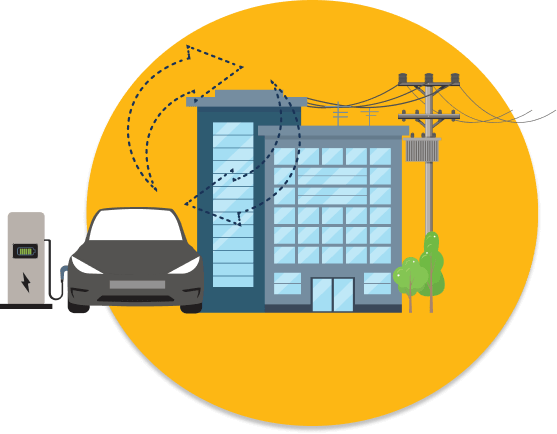
V2X charging (Vehicle-to-Everything) marks a shift in EV technology, enabling real-time, two-way communication between electric vehicles and the grid, buildings and wider energy infrastructure.
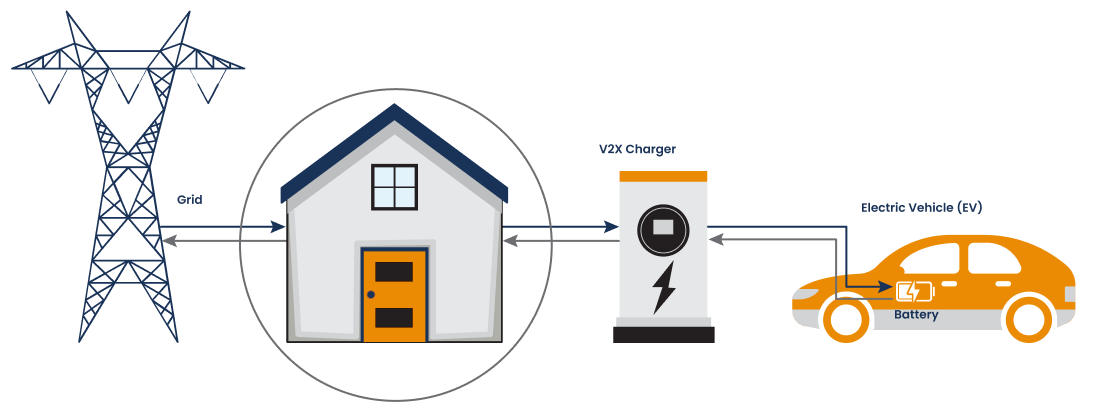
V2X charging enables bidirectional energy exchange, turning EVs into active grid participants. Rather than sitting idle, they can support resilience, flexibility and cleaner power distribution.
Why Does V2X Charging Matter?
Energy Resilience
Through V2X charging, EVs can supply power back to homes, businesses or the grid during peak demand or outages, easing pressure and improving energy resilience.

Lower Energy Costs
Vehicle-to-Home (V2H) and Vehicle-to-Building (V2B) technologies enable time-shifting of energy use, storing electricity during low-demand periods and discharging it during peak pricing windows.

Grid Flexibility
V2X charging supports grid stability by helping balance intermittent renewable energy, lower costs and accelerate progress towards net zero targets.

New Revenue Streams
V2X charging could allow fleets and businesses to sell energy back to the grid, turning idle vehicles into a potential new source of value.

Our Commitment to V2X Charging
We engineer for what’s next, not just what’s now. Our chargers are V2X-ready, with the capability to support V2X charging when infrastructure, policy and market conditions allow.
We’re not just preparing for the shift; we’re building the foundation to power it.
V2X charging could impact the EV market in three ways

It could increase the value of EVs for drivers, fleets and businesses.

It could accelerate the rollout of renewable energy by helping balance the grid.

It could create new opportunities for energy resilience and more flexible power use.
Frequently asked questions
What is V2X charging?
V2X charging, or vehicle-to-everything charging, allows energy to move both into and out of a compatible electric vehicle battery. The energy may be used by a building or site, known as vehicle-to-building or V2B, or exported to the electricity grid, known as vehicle-to-grid or V2G. The potential benefit depends on when vehicles are connected, how much energy the fleet can make available and whether the full vehicle, charger, control and connection arrangement supports bidirectional operation.
Is a V2X-ready charger the same as a live V2G service?
No. V2X-ready infrastructure provides a technical route towards bidirectional charging, but a live V2G service depends on more than the charger. The vehicle model and software, communications, energy-management controls, metering, export permissions, network connection and commercial arrangements must also align. These elements continue to develop, so compatibility and availability should be checked for the specific vehicles, site and intended use case rather than assumed from a product label.
How can a fleet protect vehicle availability when using V2X?
Transport duties should remain the first constraint. The control strategy can set a minimum state of charge, protect energy needed for the next route and prioritise vehicles with the earliest departures. It should also define what happens when a vehicle returns late, uses more energy than expected or is called out at short notice. A V2X plan is only operationally useful if it can respond to energy signals without leaving the fleet short of charge.
What should a fleet check before starting a V2G pilot?
Begin with a defined use case and success criteria. Check that the selected vehicles and chargers have been tested together, then review site import and export capacity, metering, controls, communication, network requirements and commercial terms. The pilot should measure vehicle readiness as well as energy movement. It should also include awkward operating days, such as late returns or changing routes, so the fleet can see whether the model remains workable outside ideal conditions.
With EVjuiceNgo, you’re not just investing in a charger.
You’re investing in infrastructure designed for a cleaner, smarter energy future.